
Senator Cabaldon Prioritizes Practical Solutions for California’s Policy Challenges
Senator Christopher Cabaldon takes a pragmatic approach to where he can have the greatest impact. At the second installment of the East Bay Leadership Council’s 2026 Capitol Series, he discussed his priorities, from expanding access to higher education and strengthening workforce development to addressing the region’s infrastructure needs.
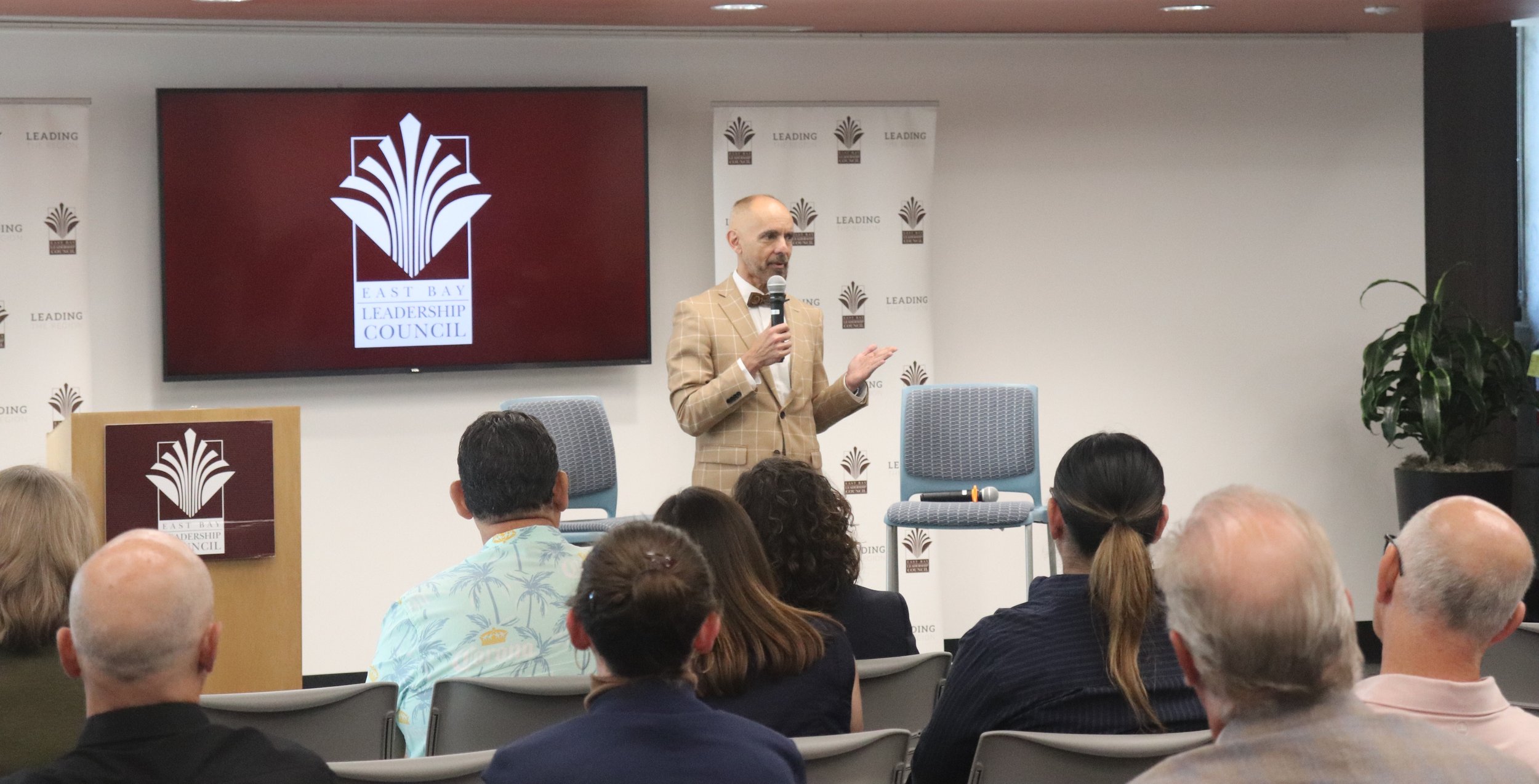
Senator Christopher Cabaldon delivers opening remarks.
A longtime advocate for higher education access, including providing free community college and automatic college admission letters for local high school seniors as mayor of West Sacramento and serving as vice chancellor of the California Community Colleges system, Senator Cabaldon has a demonstrated interest in expanding educational opportunities. In a Q&A moderated by EBLC President and CEO Mark Orcutt, he discussed SB 960, recently signed into law, which will expand opportunities for California community colleges to offer specialized bachelor's degrees beginning in 2028, subject to student completion and transfer metrics.
While the legislation creates new opportunities for community colleges, some district leaders have raised concerns about both the process that shaped the final bill and its reliance on student performance metrics, which could disadvantage colleges serving students who face greater barriers to completion. Cabaldon acknowledged these disagreements while emphasizing the potential to expand educational opportunities aligned with workforce needs.
“I do think it’s going to be really important in expanding the capacity of California’s colleges to deliver these kinds of specialized bachelor’s degrees that have huge pockets of potential across the state,” he said.
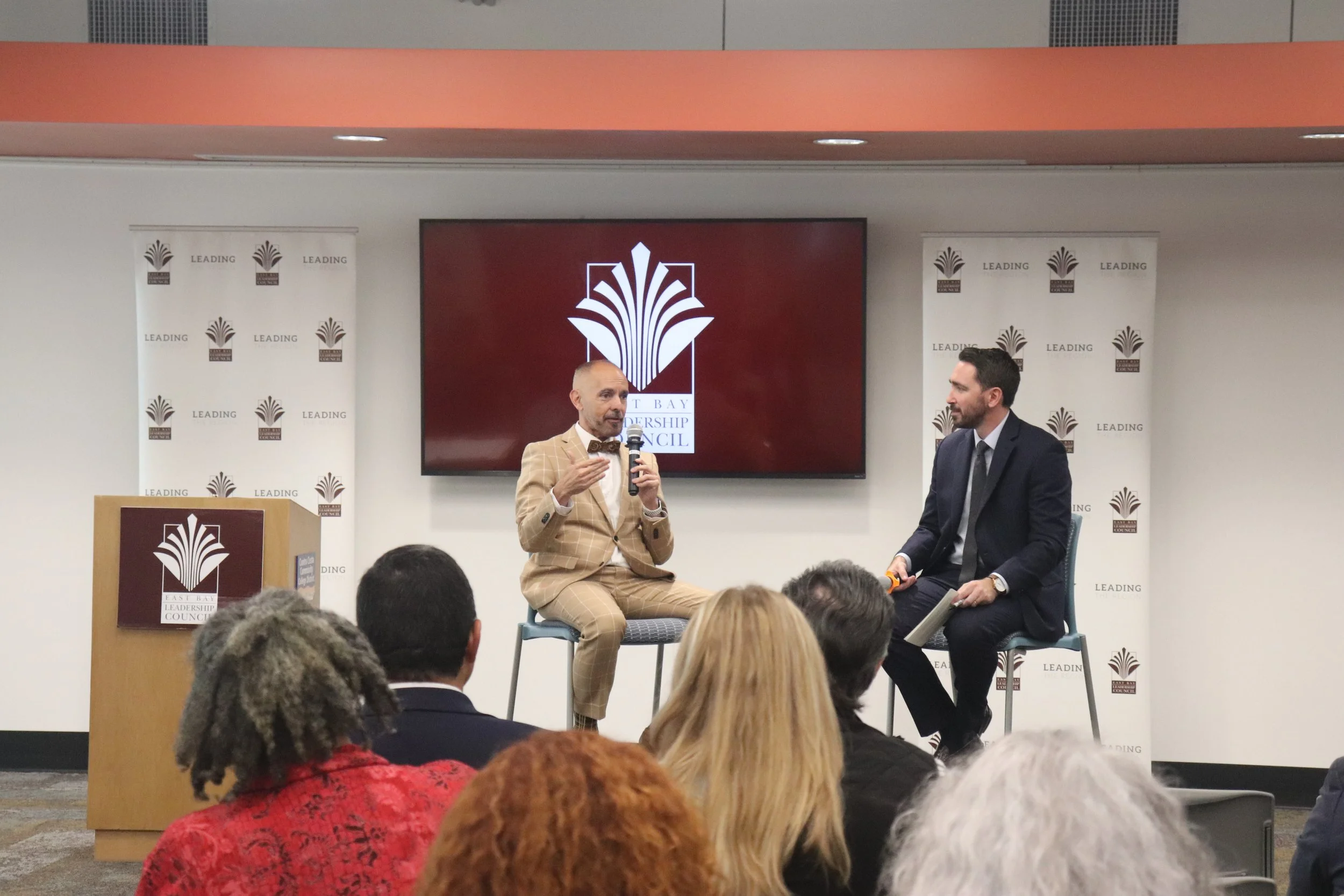
From left to right: Senator Christopher Cabaldon and EBLC President & CEO Mark Orcutt sit for Q&A
Turning to economic development in East Contra Costa County, part of his broader Third Senate District, Senator Cabaldon addressed the challenge of keeping job growth at pace with housing expansion, particularly in Oakley and Brentwood. He highlighted the importance of local leadership, with the state providing targeted support through resources such as the Governor’s Office of Business and Economic Development. Asked about California Forever, the proposed development in Solano County, Senator Cabaldon emphasized the importance of clear plans and local support before seeking state assistance. “These are supposed to be local decisions,” he said, noting that the Legislature can help communities overcome specific barriers as projects advance.
Childcare was another priority, which the Senator described as essential economic infrastructure. Building on last year’s reforms to the California Environmental Quality Act that streamlined permitting for childcare facilities in residential areas, his latest bill would extend that pathway to nonresidential sites, including shopping centers, strip malls, and underused churches. He stressed that expanding access to childcare is critical to helping employers attract and retain workers.
“We have a lot more to do on the childcare side, both in terms of dollars and workforce and everything else. But at least the permitting side will be a lot more simpler,” he said.
Healthcare presented a more difficult challenge. Cabaldon warned that federal healthcare cuts and new Medi-Cal work requirements could have devastating consequences for East Bay residents, with many at risk of losing coverage and local healthcare providers facing growing financial strain.
According to Cabaldon, California had been able to determine Medi-Cal eligibility automatically for about 85% of recipients, reducing paperwork and helping people maintain coverage. To preserve this approach under new federal requirements, he introduced legislation that would use employer wage reports, including hours worked, to verify eligibility. The bill passed the Senate unanimously but ultimately stalled before becoming law.
As chair of the Senate’s Privacy, Digital Technologies and Consumer Protections committee and a member of the Natural Resources and Water Committee, Senator Cabaldon also addressed the challenges facing California’s energy and water systems. He explored the tension between the economic opportunities presented by data centers and their growing demands on local resources, emphasizing the need for transparency and accountability as communities weigh development proposals. He expressed optimism that growing public scrutiny of AI’s resource consumption will encourage the industry to develop more sustainable approaches to energy and water use.
Throughout the conversation, the Senator’s remarks reflected the practical approach he developed during his two decades as mayor of West Sacramento: focusing on where he can make the greatest impact while recognizing that meaningful progress takes patience and timing.
“You have to embrace the fact that 80% of the big ideas will not happen,” he said. “You have to be totally cool with that—you’re letting the game come to you when it’s ready.”