
Congressman DeSaulnier Examines the Issues Shaping the East Bay’s Future
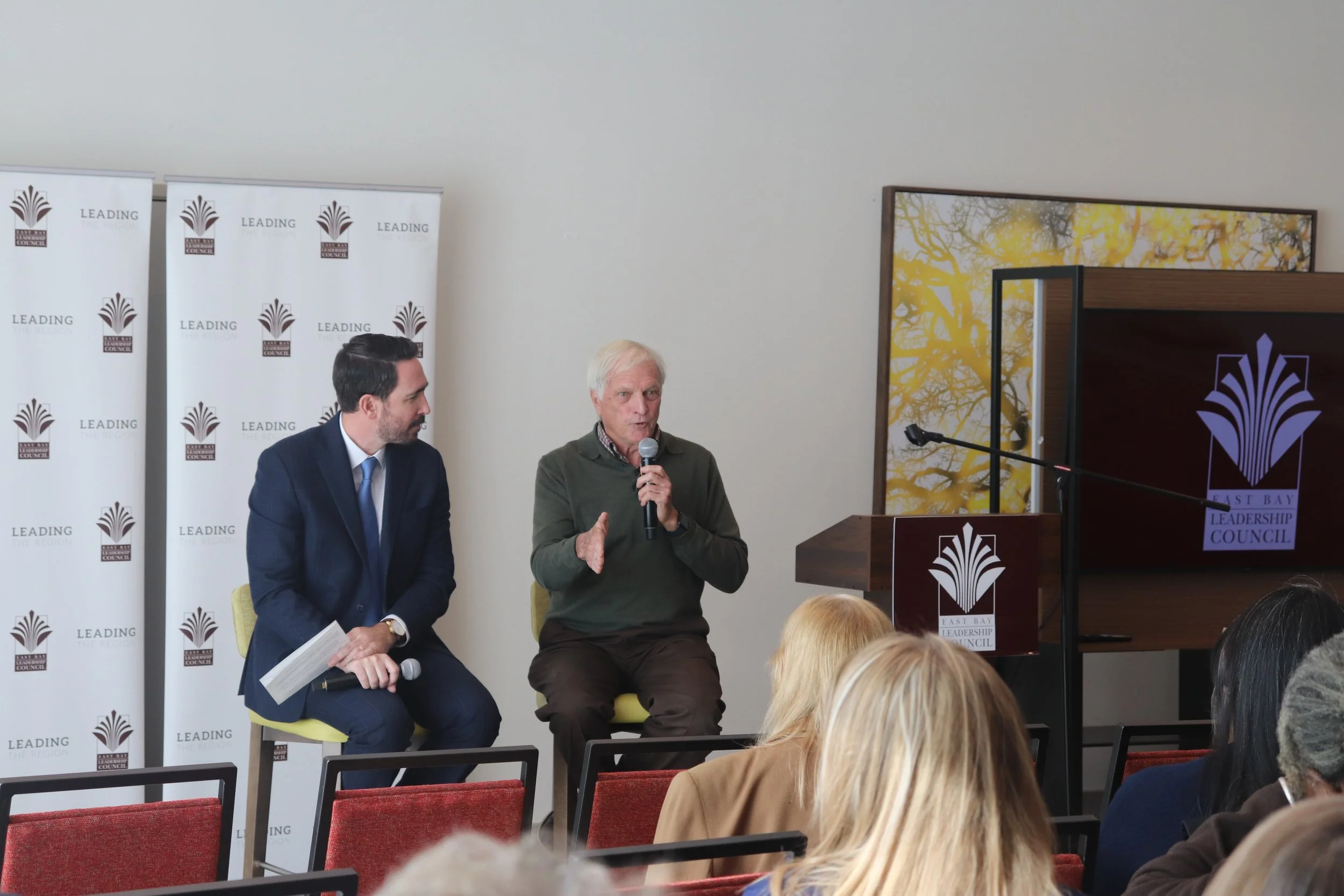
Congressman Mark DeSaulnier believes meaningful progress starts with finding common ground and focusing on solutions that deliver results. He brought that philosophy to the East Bay Leadership Council’s final 2026 Capitol Series conversation, exploring issues shaping the region’s economic outlook, from rising household costs and small business pressures to California’s energy transition, housing and transit infrastructure needs.
In a Q&A with EBLC President & CEO Mark Orcutt, DeSaulnier drew on his experience in Congress to examine how federal policy, government oversight and collaboration can help address these challenges. He highlighted the importance of grounding decisions in research and expert analysis while weighing the long-term economic and community impacts of policy choices. The conversation spanned five key areas, offering insight into the regional challenges and opportunities shaping California’s future.
The Issues That Shaped the Conversation
Economic Pressures on Households and Small Businesses
DeSaulnier described independent restaurants as “the canaries in the coal mine” for household financial health, noting that rising costs across housing, transportation, childcare, and healthcare leave families with less disposable income. He explained that dining out is often among the first discretionary expenses households reduce when budgets tighten. These shifts can affect small businesses and Main Street early, making restaurants an important indicator of broader economic conditions. He also pointed to childcare and transportation costs as barriers to workforce participation for single-parent and two-income households alike.
Trade Policy, Foreign Relations and Congressional Oversight
The conversation examined how federal trade policy and tariffs influence domestic manufacturing, consumer costs and America's position in the global economy. DeSaulnier questioned the administration’s approach to imposing tariffs, pointing to concerns about the erosion of established legal and constitutional safeguards. “Tariffs are supposed to start in a partnership between the legislative branch and the administrative branch. In normal times, you wouldn’t have precedent like this and just ignore precedent and law,” he said. He also discussed Congress's constitutional authority to declare war as an important check on executive power. Turning to the Department of Defense (DOD), he cited Inspector General reports identifying waste and fraud, particularly in procurement, and emphasized the importance of stronger oversight and accountability for federal spending.
California's Energy Transition and Refinery Future
DeSaulnier emphasized the need for a managed transition from fossil fuels to alternative energy that accounts for the economic importance of the region’s existing energy infrastructure. Refineries in his district are among Contra Costa County’s largest tax contributors, helping fund local schools and essential services. He warned that refinery closures without a thoughtful economic transition could jeopardize significant tax revenue supporting local schools and municipal services. Instead, he advocated for research and competitive grants to explore how facilities could adapt to alternative fuels, including biodiesel, while maintaining domestic energy capacity.He also stressed the importance of collaboration among industry, labor and regulators to improve refinery safety and reduce emissions. Responding to a question about expediting projects that advance those goals, DeSaulnier acknowledged the need to revisit regulatory processes so improvements can move forward more efficiently while maintaining strong safety and environmental protections.
Housing Development and Regional Transportation
DeSaulnier highlighted his work on the Housing Innovation Act and SB 375, which aim to encourage infill development and limit urban sprawl. Turning to regional transportation, he addressed BART's operating deficit and encouraged a closer examination of cost-effectiveness across different transportation modes. He also stressed the importance of improving last-mile connections to strengthen regional mobility and make public transit more accessible and effective.
Regional Land Use and Emerging Infrastructure
The conversation explored the complexities of large-scale development and the growing infrastructure demands associated with emerging industries. DeSaulnier discussed the longstanding challenges of advancing the Concord Naval Weapons Station project, emphasizing the importance of investing in the infrastructure needed to unlock the site's potential. He highlighted the site's potential to accommodate a community of approximately 30,000 residents, emphasizing the importance of infrastructure investment to unlock that opportunity. DeSaulnier also encouraged flexibility on development density, arguing that higher-density housing should be considered if necessary to make the project financially viable and deliver affordable housing. He also addressed the growth of data centers, urging local leaders to consult subject matter experts and carefully assess the long-term implications for land use, energy demand and infrastructure capacity. He emphasized the importance of understanding both the potential benefits and long-term liabilities of these projects as communities weigh their economic development priorities.
We are grateful to our Capitol Series Presenting Sponsor, Sutter Health, and all of our sponsors for their continued support in advancing these important conversations for the East Bay.