
Assemblymember Wicks is Focused on Confronting California’s Affordability Crisis
Assemblymember Wicks Highlights Affordability Tradeoffs at EBLC 2026 Capitol Series Kickoff
Assemblymember Buffy Wicks kicked off the EBLC’s 2026 Capitol Series just days after the June primary with a wide-ranging discussion on the difficult tradeoffs facing lawmakers as they work to address California’s affordability crisis amid mounting fiscal uncertainty.
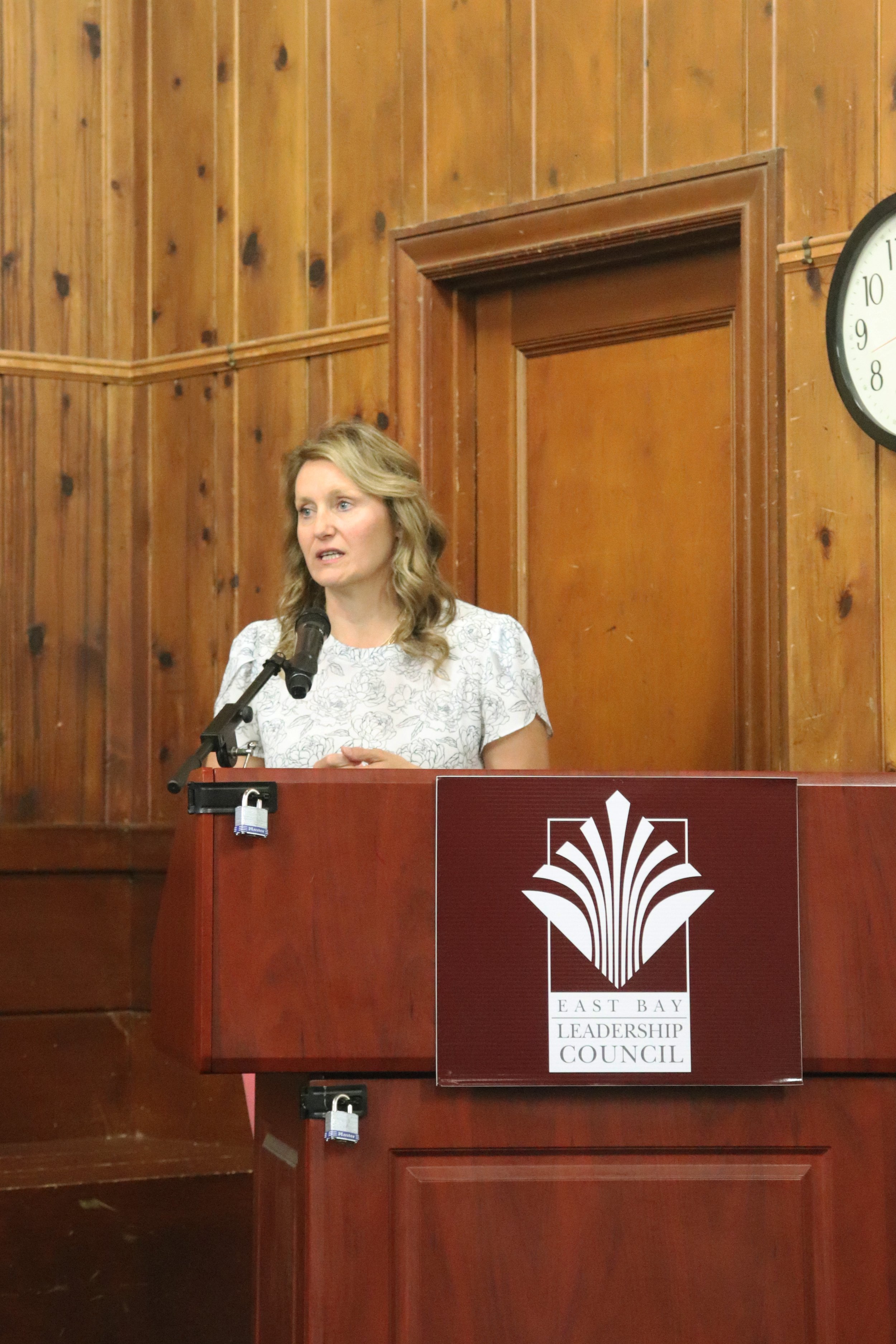
Assemblymember Buffy Wicks delivers opening remarks.
In a conversation moderated by EBLC President and CEO Mark Orcutt, Assemblymember Wicks explored the challenges confronting the state, from housing affordability and healthcare access to energy reliability and artificial intelligence, emphasizing that effective solutions require the kind of bipartisan collaboration that have marked her legislative career.
“Some of my toughest housing bills and some of my toughest tech bills have been bipartisan through and through,” she said.
A leading architect of recent reforms to the California Environmental Quality Act (CEQA), Wicks defended the changes as an important step toward accelerating housing production and restoring certainty to the market.
“Ten thousand units have been streamlined using AB 130,” she said. “Is it solving the entire problem? Not yet. Is it an important element to solve the problem? It is, and I think we’ll continue to build from that.”
Assemblymember Wicks stressed that streamlining alone will not solve the housing crisis, pointing instead to the need for both public investment and private-sector solutions. She highlighted a proposed $10 billion housing bond to support low-income housing.
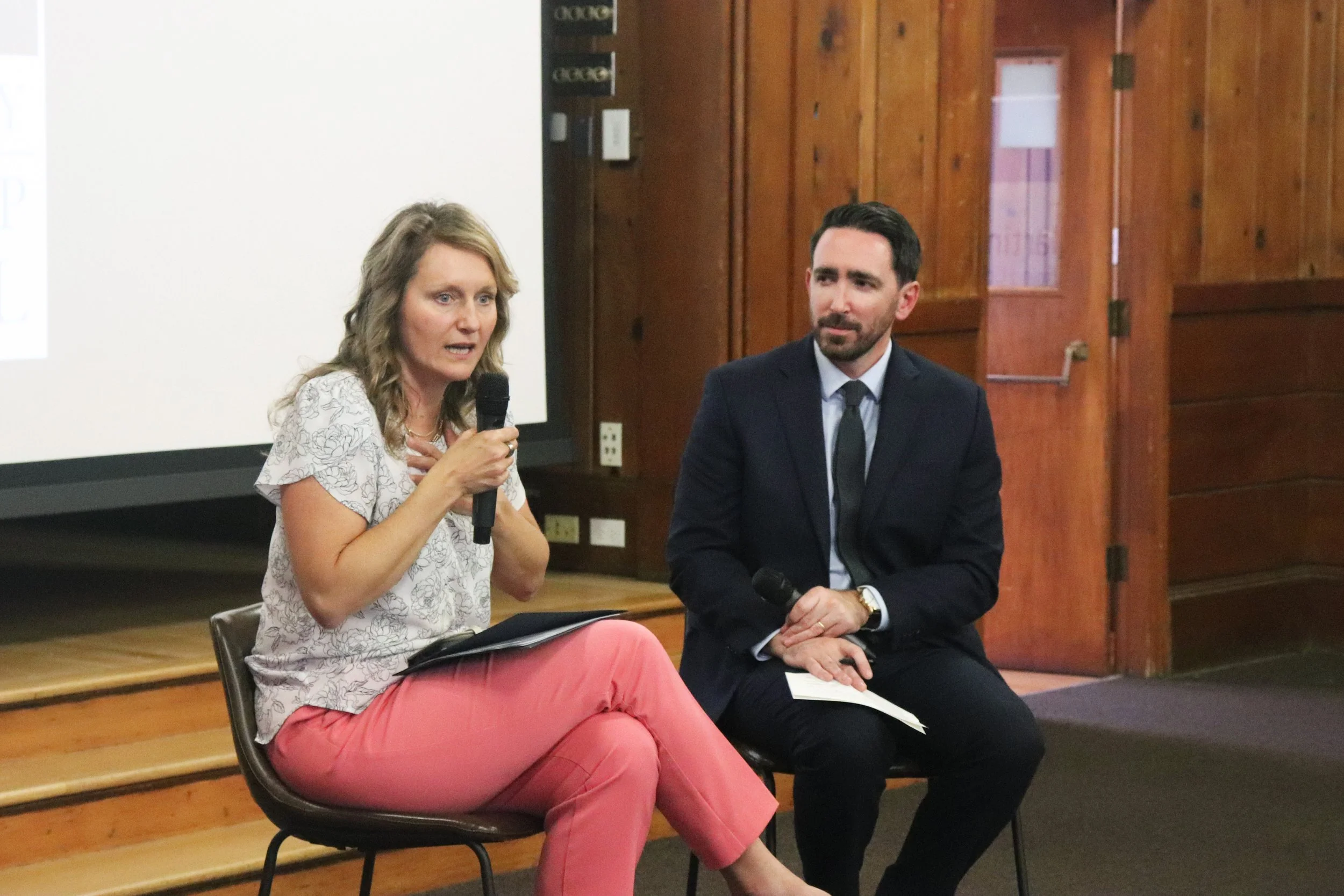
From left to right: Assemblymember Buffy Wicks and Mark Orcutt.
The conversation later turned to the state’s mounting budget pressures and the difficult choices lawmakers face as federal policies threaten to place additional strain on California’s social safety net.
“This is the total tension point that we have,” Wicks said. “Do we take money away from housing to go to food? Do we take money away from food to go to healthcare?”
Protecting Medi-Cal access and food assistance programs, she said, remains a priority even as competing demands stretch limited resources. Wicks also touched on energy affordability and artificial intelligence, emphasizing the need to align innovation with California’s climate goals while remaining mindful of cost-of-living pressures on working families. Representing a district with major refinery operations, she explained that the state’s transition to cleaner energy must be managed pragmatically to maintain reliability and avoid worsening already high utility and fuel costs.
She described artificial intelligence as both a major economic opportunity and a disruptive force, pointing to its potential to drive productivity and growth while calling for strong safeguards, particularly for children, to ensure California can continue leading in innovation without ignoring the risks the technology poses.
Across each issue, from housing and healthcare to energy and technology, Assembymember Wicks stressed that effective governance requires leaders to navigate difficult tradeoffs while remaining focused on results. Ultimately, she argued, preserving public trust—and strengthening democracy—depends on leaders’ willingness to engage across differences and address problems with candor.
“Brutal honesty as an elected official is critical,” she said. “I think you need to say what you think, mean what you say, be honest about it.”
We are grateful to our Capitol Series Presenting Sponsor, Sutter Health, and all of our sponsors for their continued support in advancing these important conversations for the East Bay.