
Economic Ambition Demands Public Transit
Viewpoint Published in the San Francisco Business Times on April 2, 2026.
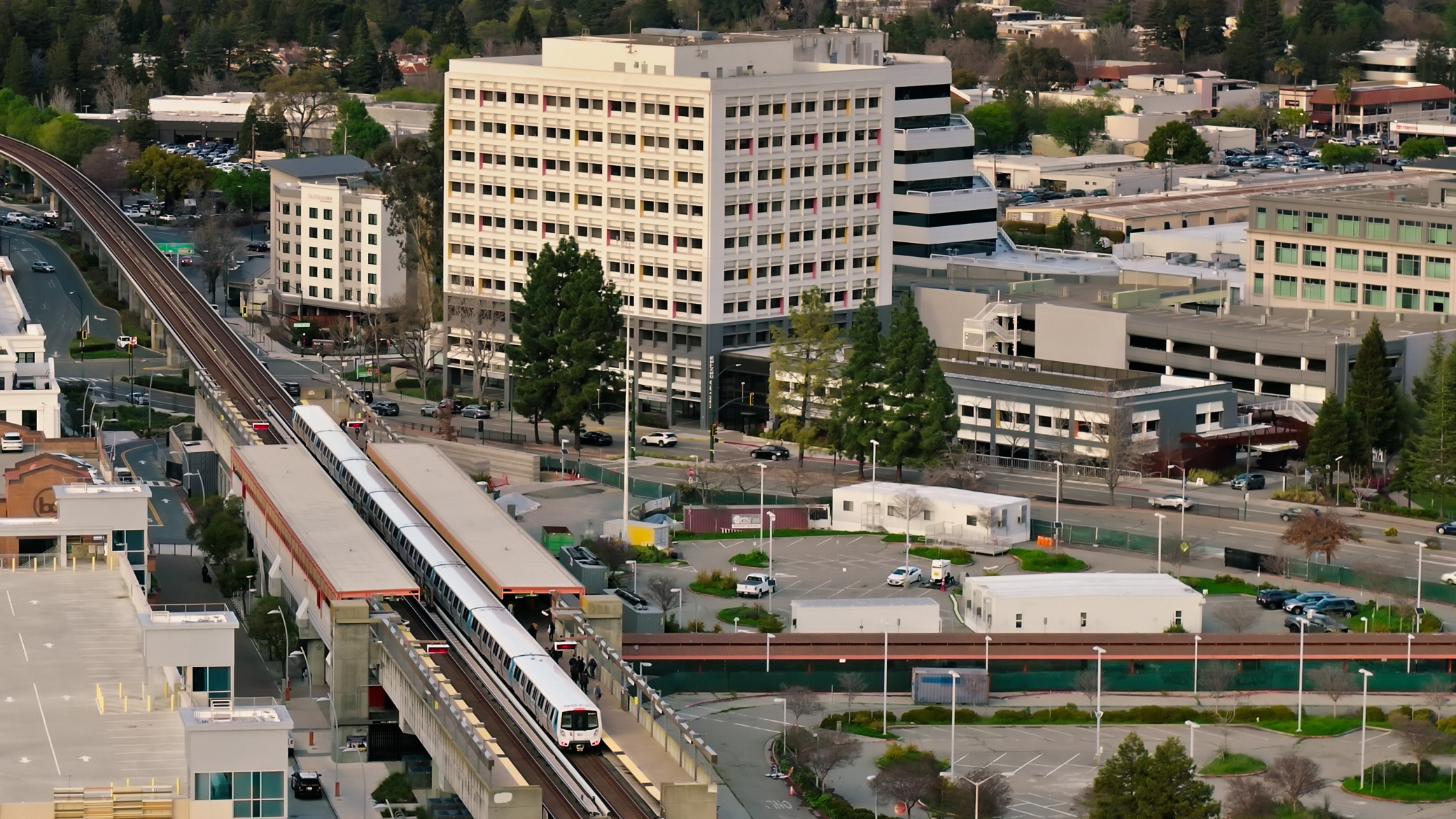
Today, there are signs of real economic momentum in the Bay Area. Employers are making long-term decisions about office footprints. Venture investment is regaining strength. Downtown corridors are rebuilding activity. Across industries, there is cautious confidence that the region is turning a corner.
The question now is not simply how we maintain that progress, but how we align our infrastructure with the scale of our economic ambition.
Central to that alignment is our public transportation system. Public transit is not simply a public service. It is essential economic infrastructure. It connects employers to talent, sustains commercial districts and downtown recovery, underpins real estate value, and expands access to opportunity.
Today, our transit system faces a fiscal challenge as federal relief funds expire and ridership has not returned to pre-pandemic levels. Without a long-term solution, operators have warned of significant service reductions, including lower frequency, potential station closures, and reduced evening and weekend service. Those outcomes would narrow workforce access, increase roadway congestion, and complicate hiring and retention for employers across industries.
But this moment should not be framed solely as a crisis to avert. It is also an opportunity to stabilize the transportation network that supports our regional economy.
The Bay Area operates as one integrated economic region. Talent, capital, and customers move across county lines. When transit weakens anywhere in the system, the impact is felt everywhere.
That is why the East Bay Leadership Council, along with regional business leaders including the San Francisco Chamber of Commerce, the Bay Area Council and SAMCEDA, supports Connect Bay Area, a regional measure on the November ballot to provide stable, long-term transit funding. The measure pairs new investment with independent financial reviews for each operator, stronger regional coordination requirements, and a citizen oversight committee to track spending and performance. Businesses and voters alike deserve transparency and measurable results.
There is also encouraging progress to build on. BART has invested in safety and fare compliance while increasing the visible presence of uniformed personnel and ambassadors. Muni has made measurable improvements in reliability, including reducing subway delays. AC Transit has realigned its service to better match current ridership patterns and strengthen connectivity. Caltrain’s electrification has modernized service, improved performance, and reduced long-term operating costs. These steps demonstrate that operational improvements are possible and worth sustaining.
The choice before the Bay Area is not whether transit survives. It is whether we will align our transportation system with the scale of our economic ambition.
If we believe transit is core economic infrastructure, then we must treat it that way — with investment, sustained advocacy, and the resolve to see this campaign through November.
We intend to meet that ambition.
Mark Orcutt is President and CEO of the East Bay Leadership Council, the region's leading employer advocacy organization, which for nearly 90 years has advanced policies to strengthen the economy, protect quality of life, and expand opportunity in Contra Costa and Alameda Counties.